


Delegation Visit to Koehler Paper Mill
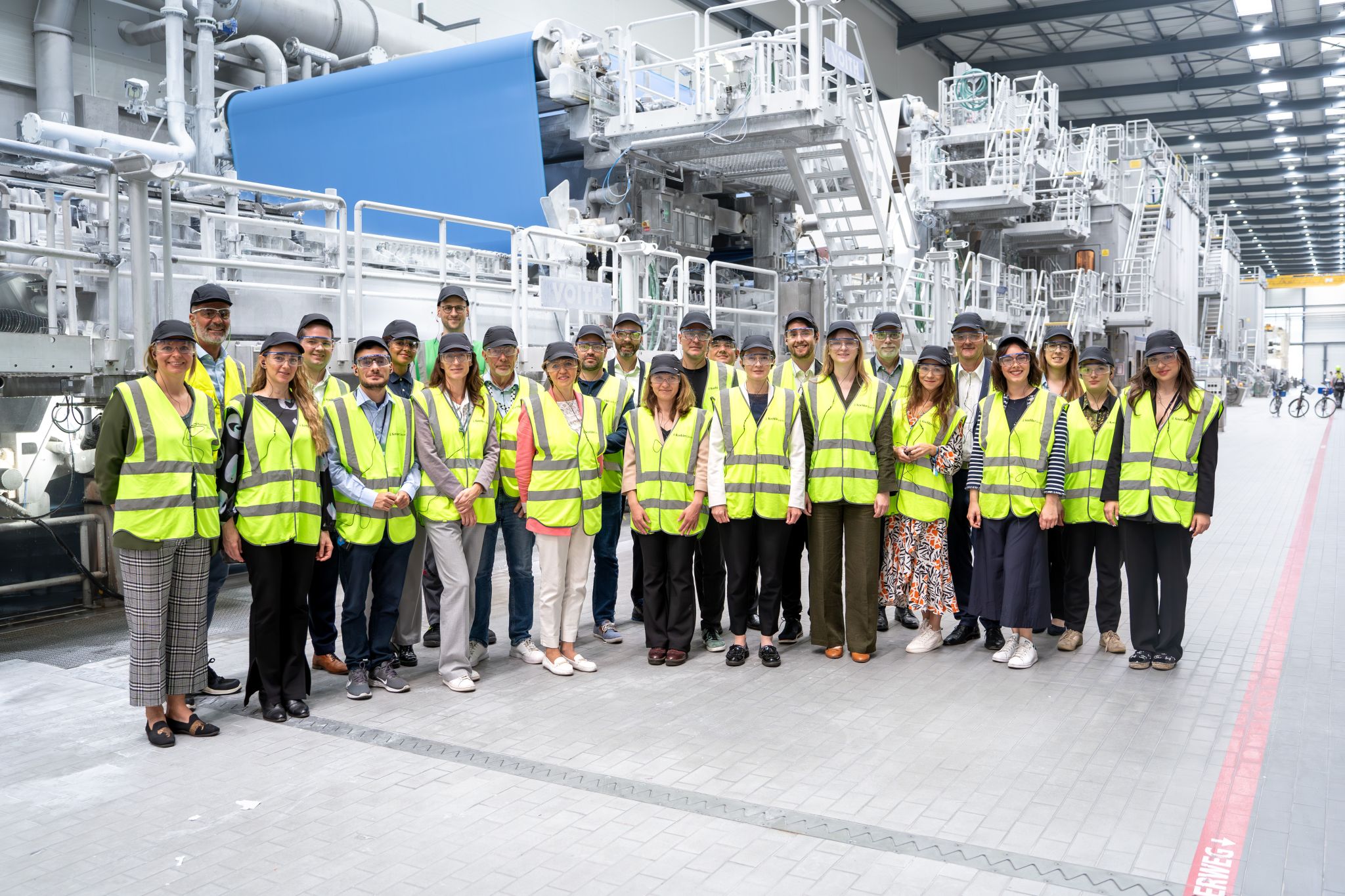
As part of its ongoing dialogue on the energy transition, the European Energy Forum organised a site visit to Koehler Paper in Kehl in partnership with CEPI and COGEN Europe.
The visit brought together MEPs and EEF Associate Members, who gained firsthand insight into the highly energy-intensive papermaking process and explored how high-efficiency cogeneration (CHP) contributes to decarbonising energy-intensive industries, while supporting energy security, competitiveness, and the integration of renewable energy.
Tsvetelina Penkova MEP, EEF President, welcomed the participants underlining the importance of observing real-life challenges, and engaging directly with industry representatives.
As energy-intensive industries remain central in current political and policy discussions, understanding the challenges they face on-the-ground is essential to identifying the right enabling conditions for a competitive and resilient industrial transition.
Dr. Stefan Karrer introduced Koehler Paper and its core business areas (paper and wind), As an energy intensive industry, Koehler Paper has developed a decarbonisation strategy, the main goal of which is to produce more electricity (86%) and steam (74%) from their own plants, needed for paper production, by 2030. Transformations and investments are key elements of Koehler Paper’s growth strategy since daily volatility in electricity prices across Europe directly impacts energy-intensive industries like papermaking
On behalf of Cepi, Jan Christoph Schaffrath, explained the fundamentals of the papermaking process. The German industry is facing major challenges with soaring gas prices also impacting the electricity market. While the transition to renewables is underway, infrastructure development is lagging, and more grid connections and storage solutions are urgently needed. At the same time, the industry is facing a sharp reduction in carbon leakage protection, the CBAM mechanism is proving ineffective, particularly for the paper sector. To ensure a positive climate protection, the pulp and paper industry should focus on the use of sustainable raw materials, encouraging a high recycling rate and a flexible integration of renewables with CHP.
Dr. Uwe Braun represented the cogeneration sector, which is committed to creating a resilient, decentralised, carbon-neutral European energy system by 2050. With cogeneration as its backbone, it will integrate heat, electricity, and gas networks to enable a cost-effective transition. On behalf of COGEN Europe, Dr. Braun explained the principles of cogeneration, a process that converts 90% of the energy into useful heat and electricity, avoiding heat losses, generating more productive energy than average, and reducing electricity grid losses. He also noted that CHP operates as a base load during periods of low wind and solar generation, covering a significant share of residual peak demand, but stops producing when variable renewable generation is sufficient to meet demand.
The discussion included the implementation of the Clean Industrial Deal, energy efficiency and fossil-free heat as well as investment needs and carbon leakage protection among many others. One of the main points of interest was Europe’s goal to become independent from other countries in terms of energy supply, while remaining competitive in the global market. Perspectives on concrete examples of industrial waste heat recovery supporting local district heating and cross-border decarbonisation efforts were also explored during the conversation.
A tour of the Koehler Paper facilities followed, allowing MEPs and EEF Associate Members to discover technologies firsthand. After paper fibres are suspended in the water, they are dewatered on a mesh fabric. The wet paper web is then mechanically dewatered while the damp paper is dried. Once dried, the paper web is ready to be wound around a reel drum.
Participants had the occasion to ask their questions directly to the experts running the factory and to understand better how proactive management needs to develop to adapt to an ever-changing energy and industrial landscape.